What's it like to lobby your MP for animals?
The Mass Lobby Day
Reflections on a visit to Parliament
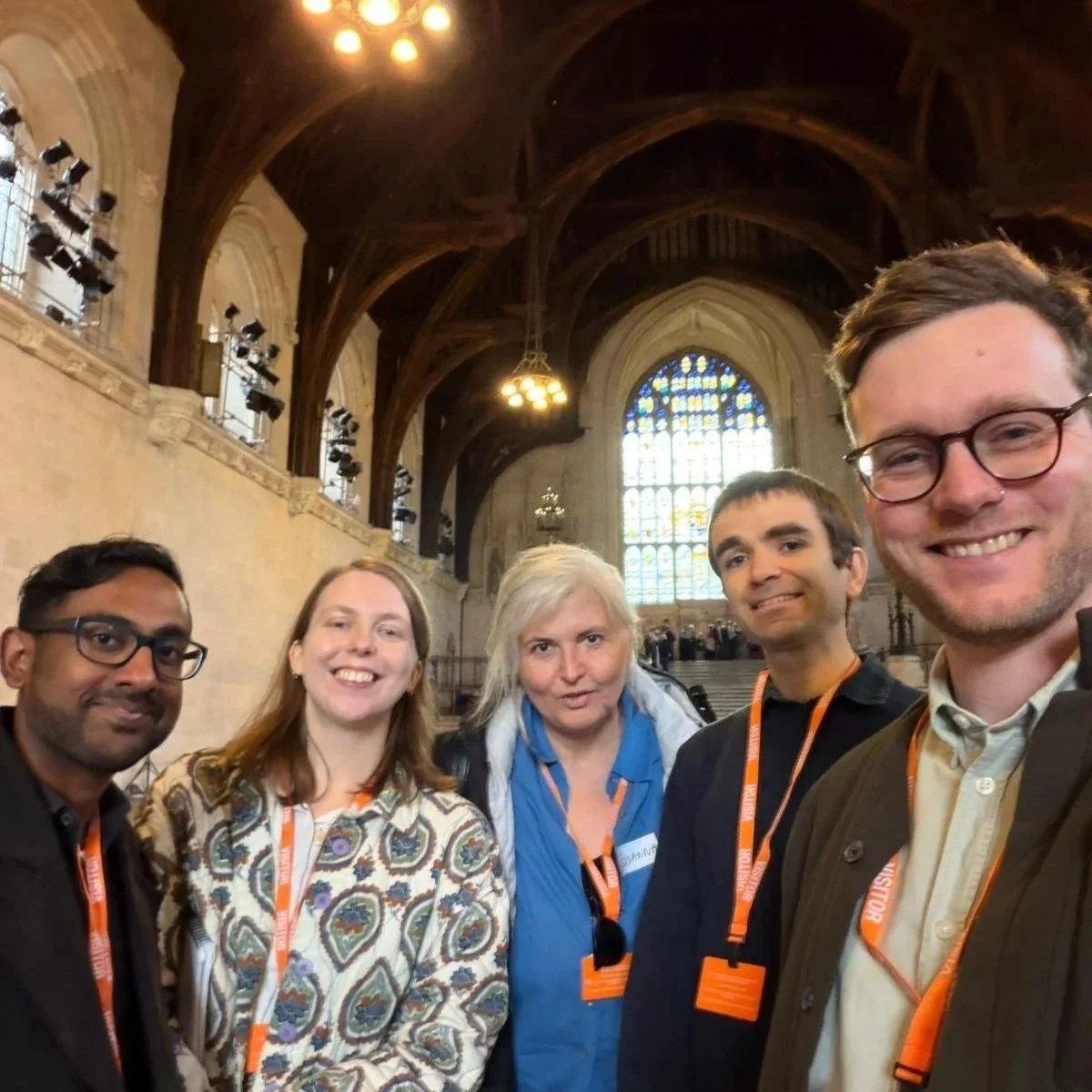
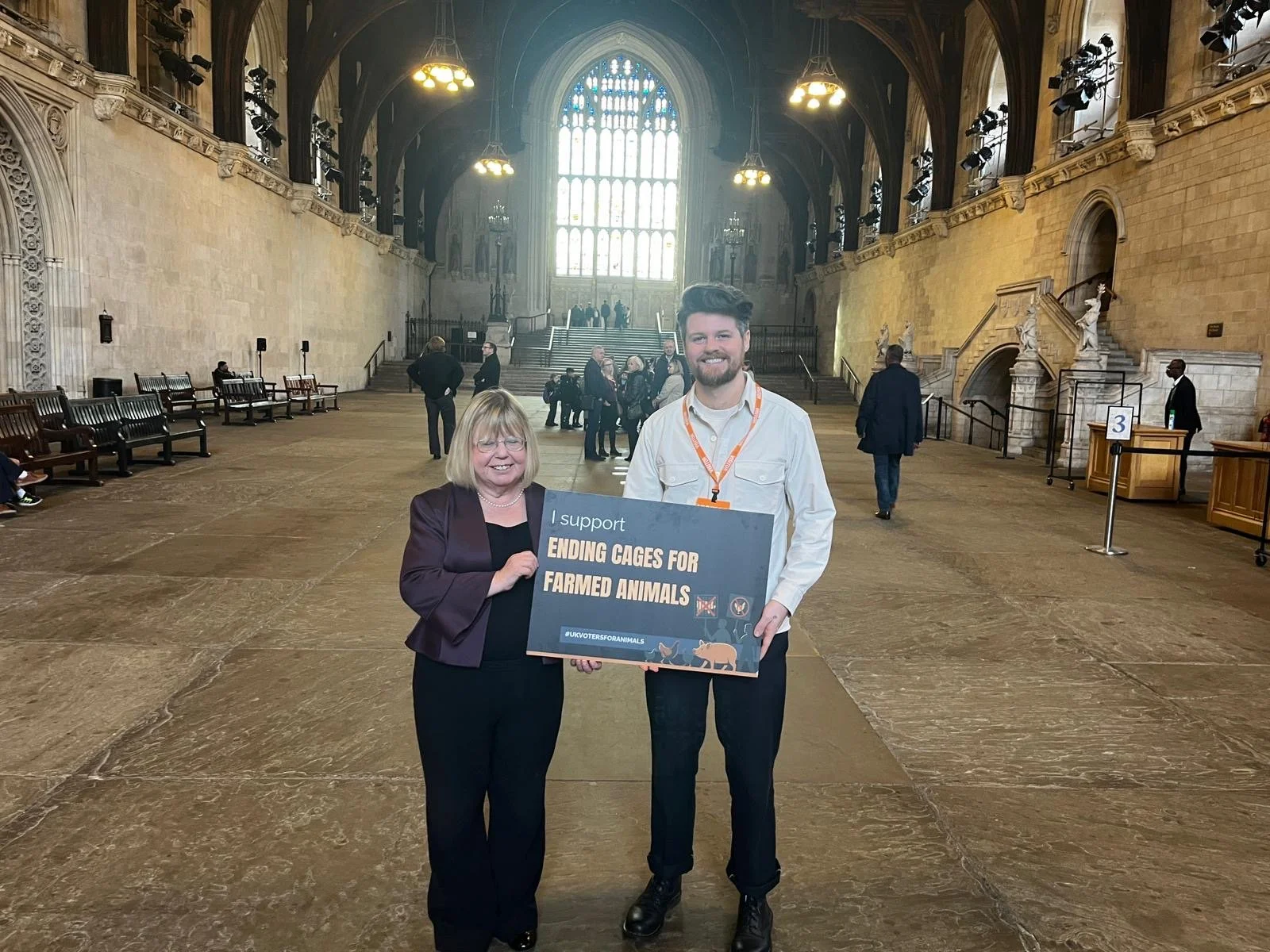
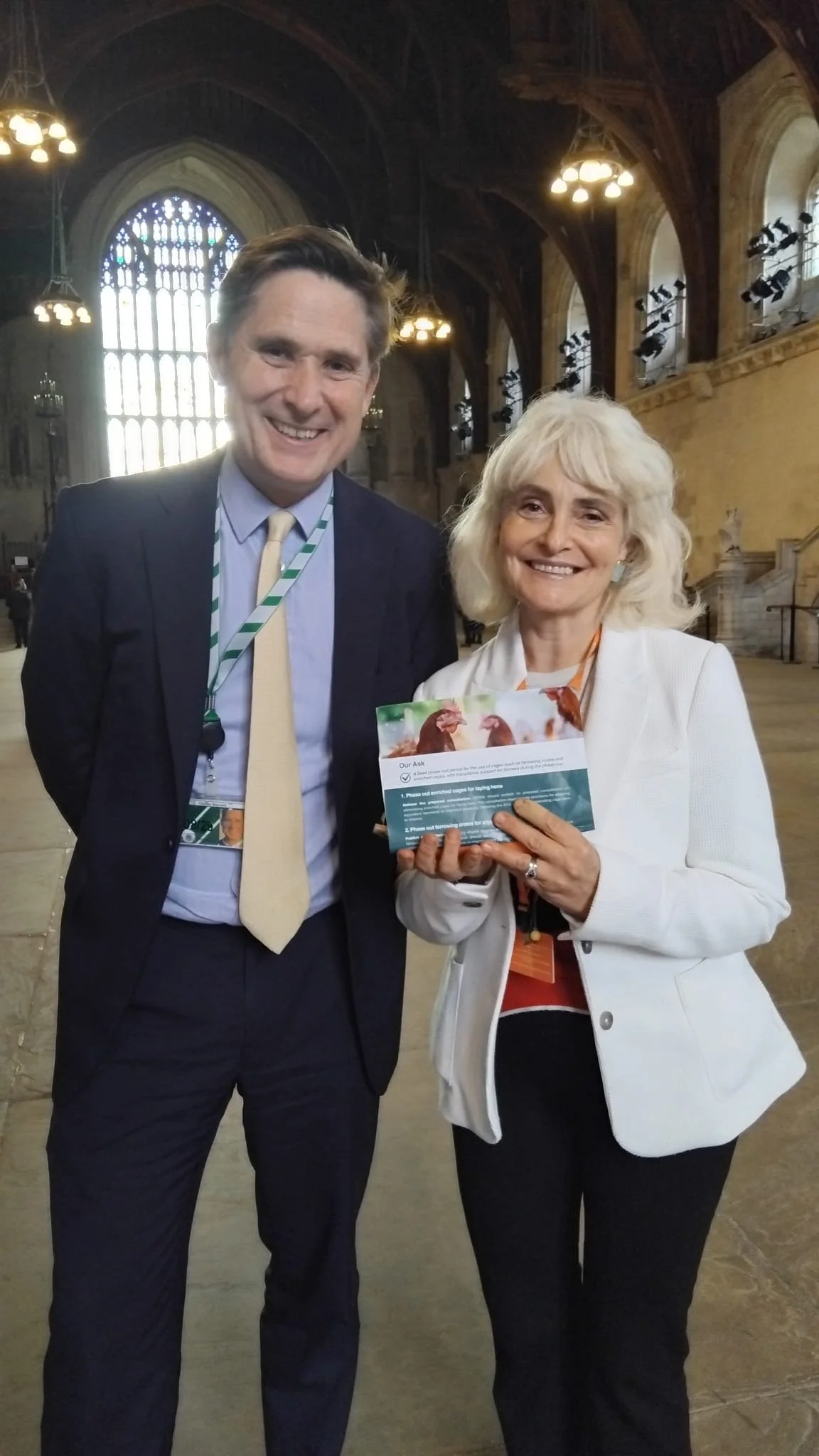
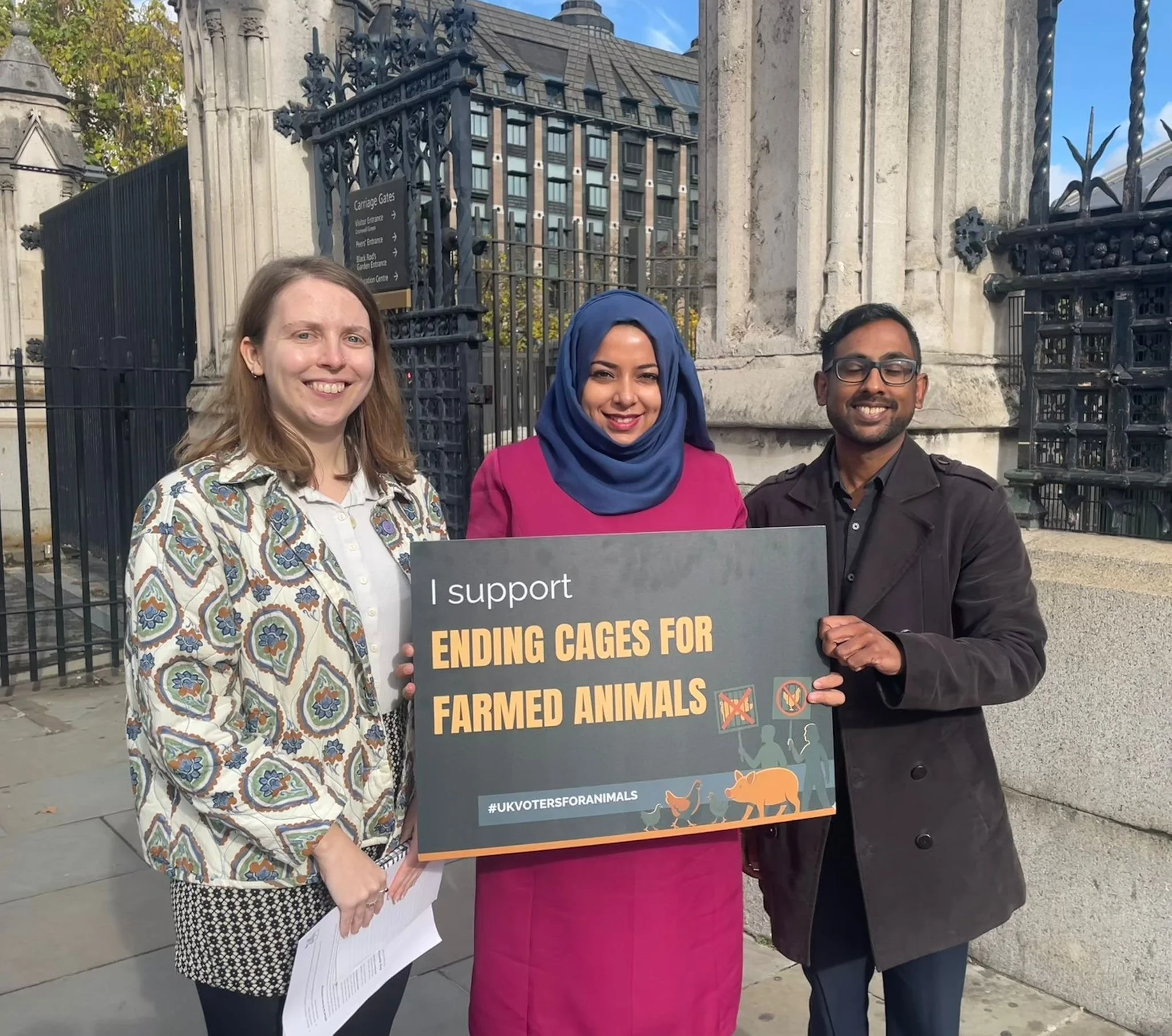
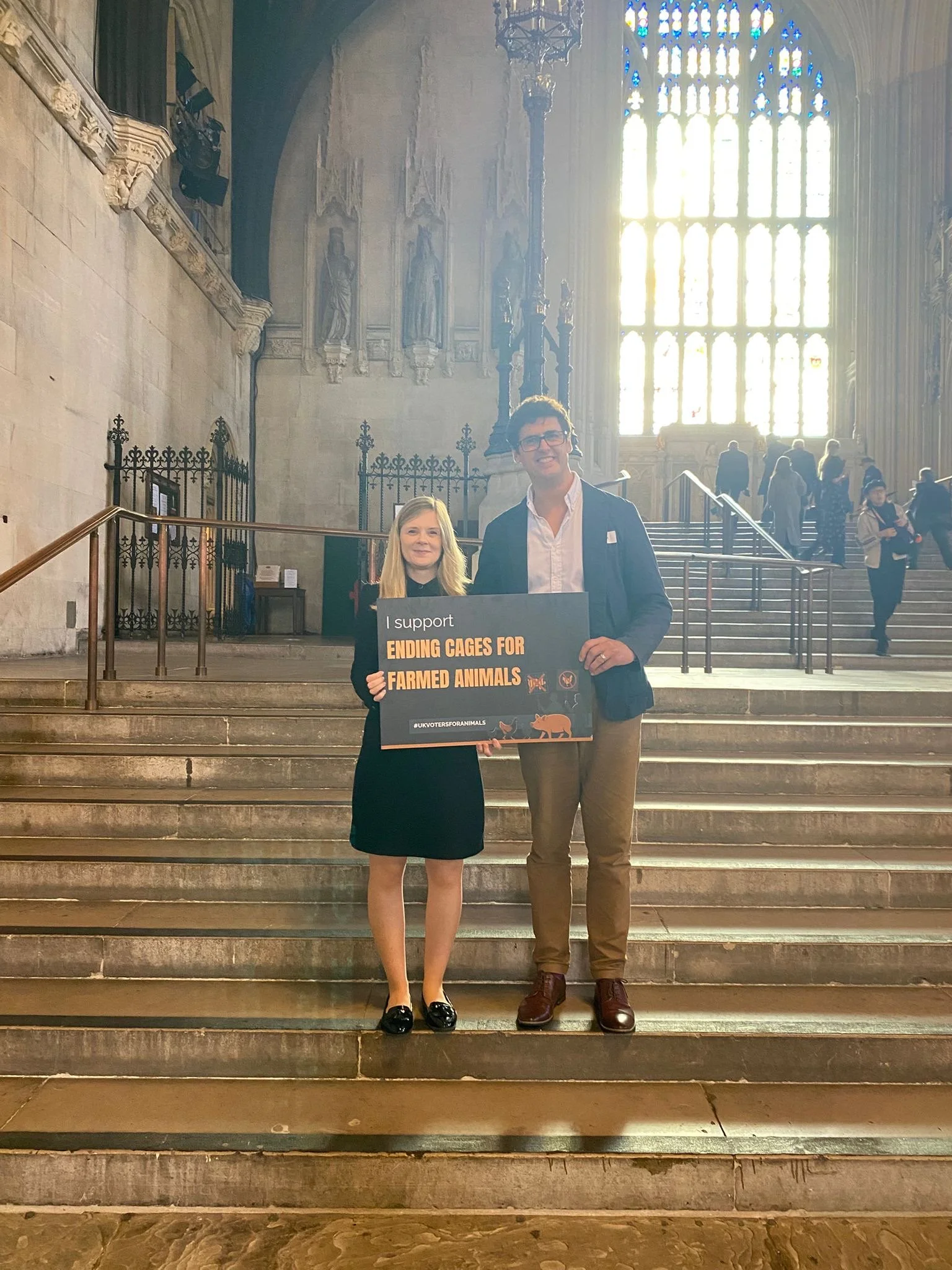
On the 21st of October last year, I attended the first "mass lobby day" ever held for animal welfare in the UK, apparently organised in just a month and a half, on a tight budget. The plan? For a bunch of ordinary people to stroll into Parliament, and tell their MPs to support a ban on cruel cages for hens and pigs. Here's how that went.
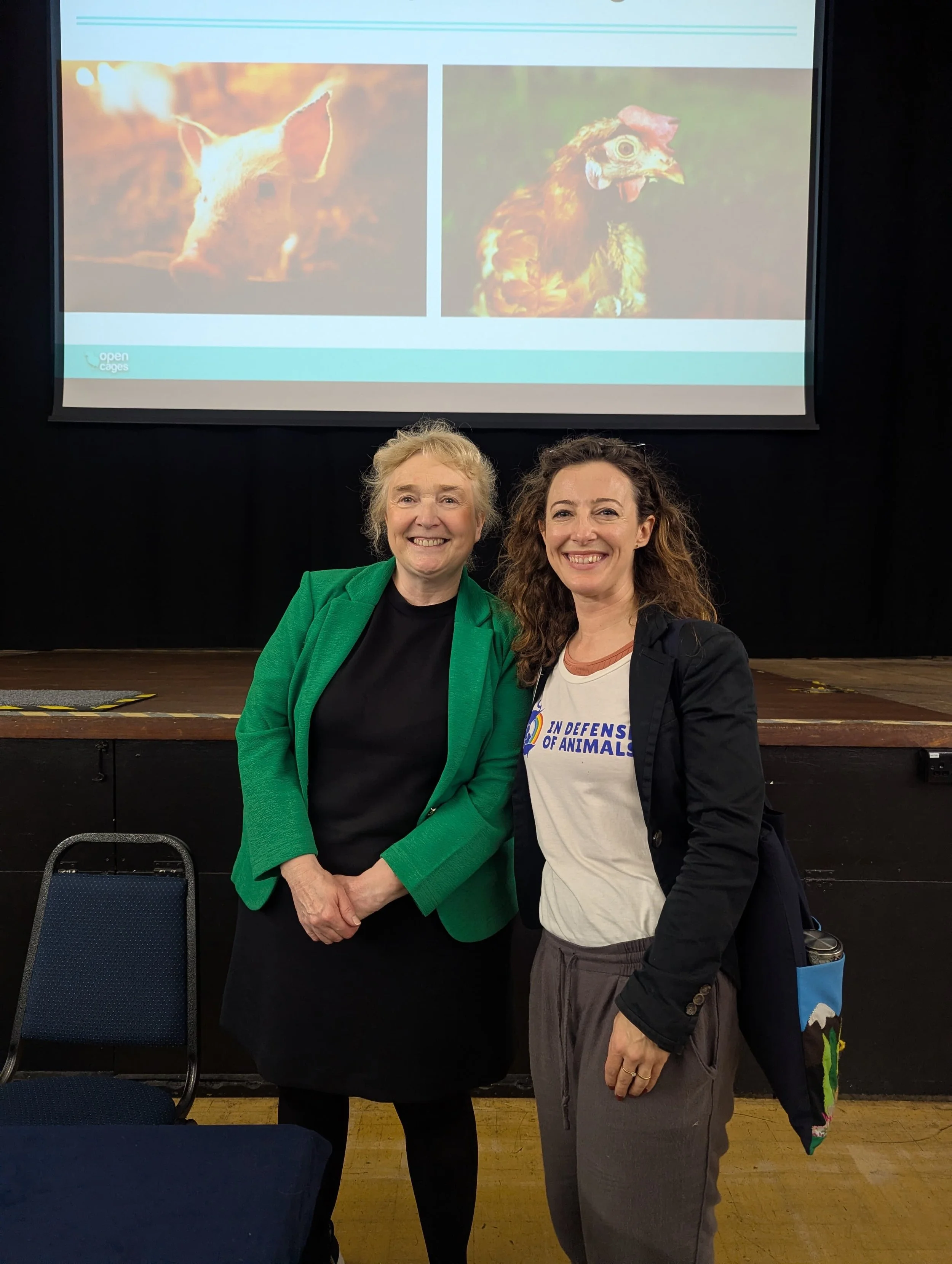
After some quick ice-breakers[1] among the Voters For Animals™ who had gathered in the venue, we were greeted by the wonderful Irene Campbell MP, a strong supporter of animal welfare in Parliament. We had some moving presentations going over the details of the suffering that cages and farrowing crates cause for hens and pigs, and how they've been successfully phased out in practice.[2]
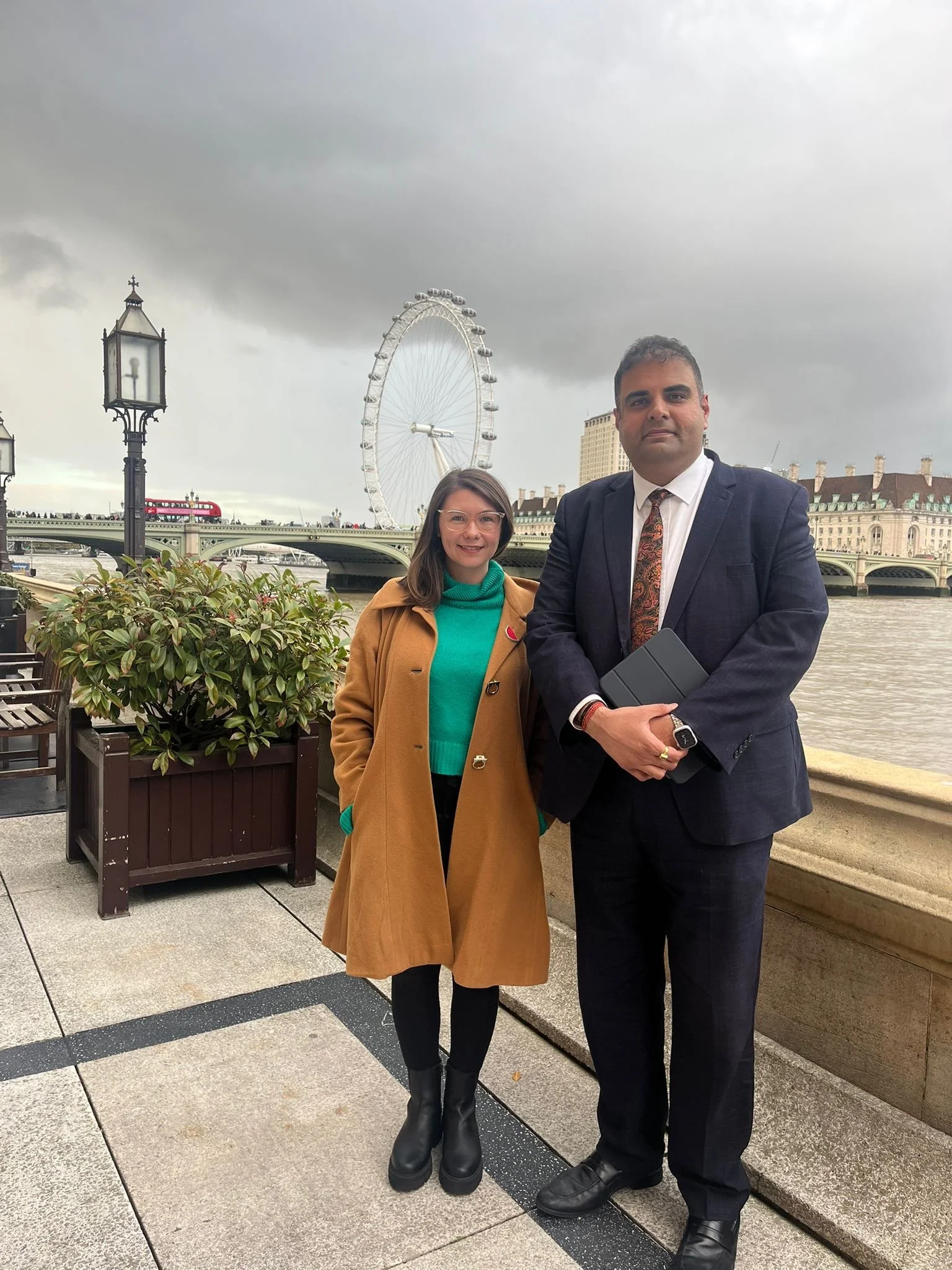
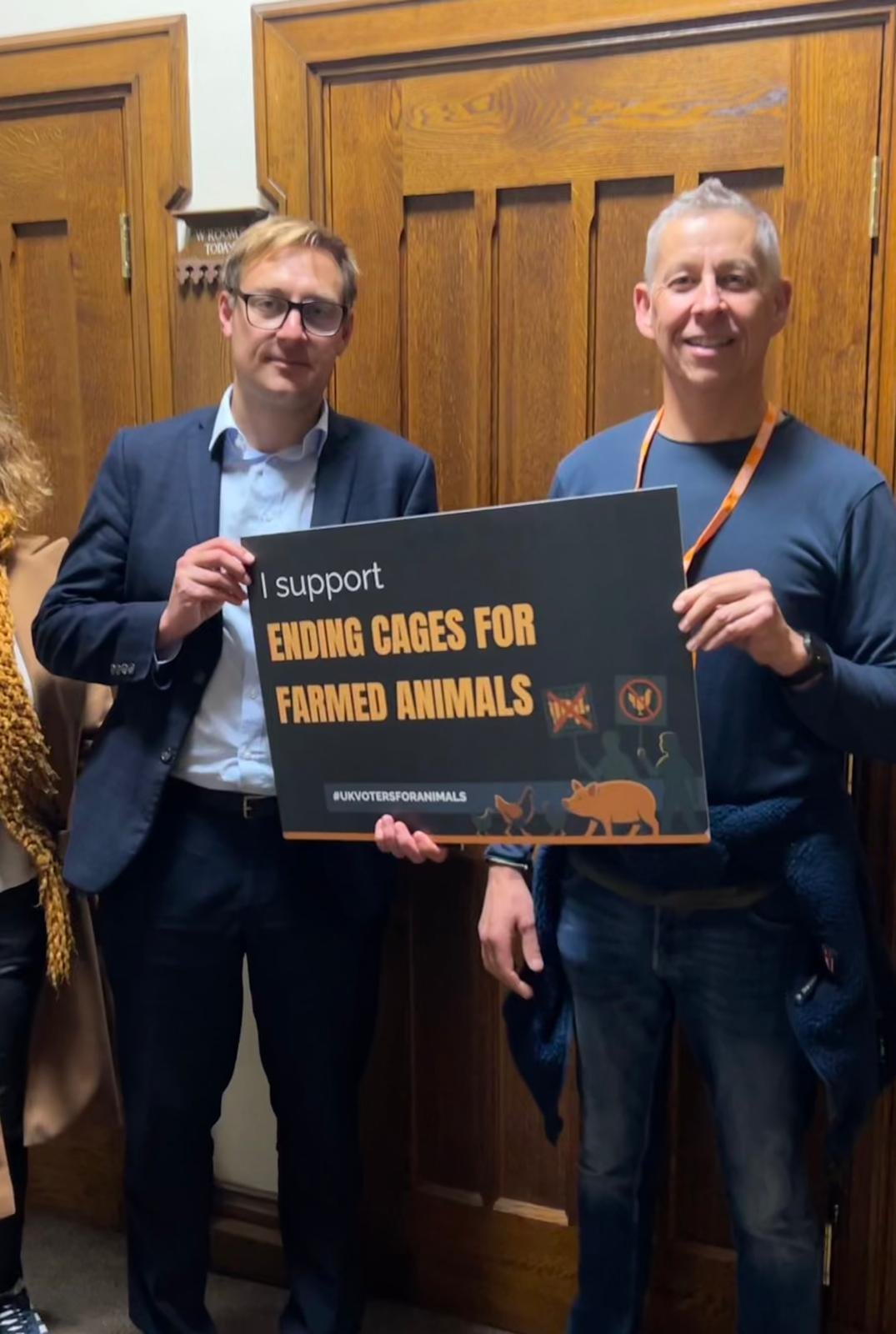
Then, it was time to go for a walk. By which I mean, it was time for some green carding – that is, going to Parliament, through security, and waiting while a message is passed on to your MP that a constituent has come to meet them. Something I'd never heard of doing before.
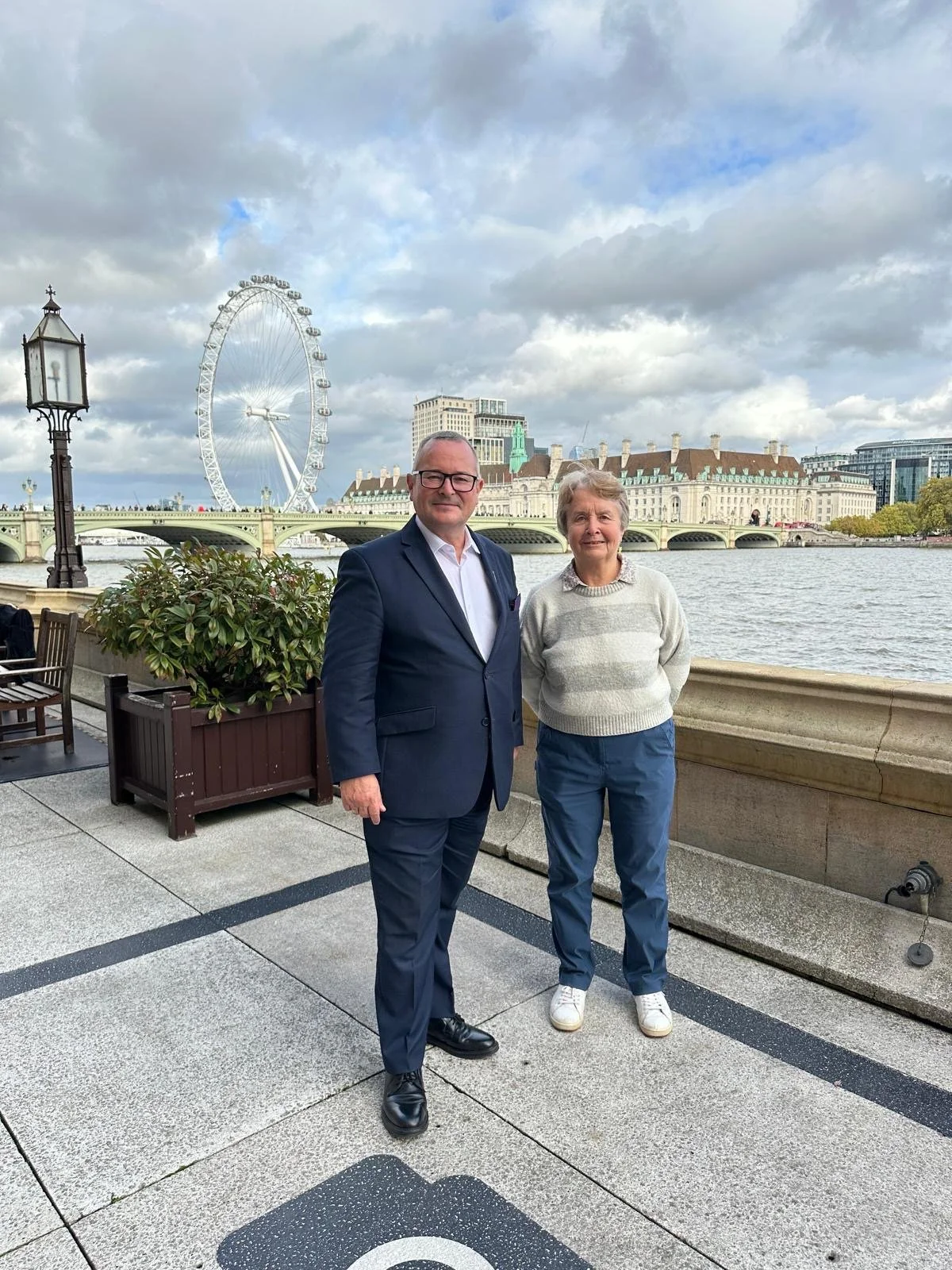
We gathered in Westminster Hall. People chatted and debated. Every now and then a name would be called out, and someone, or a small group, would jump up, their MP having heeded the call. I felt a nice sense of shared enterprise with the friendly crowd of people, mixed with nervous energy from the responsibility I felt.
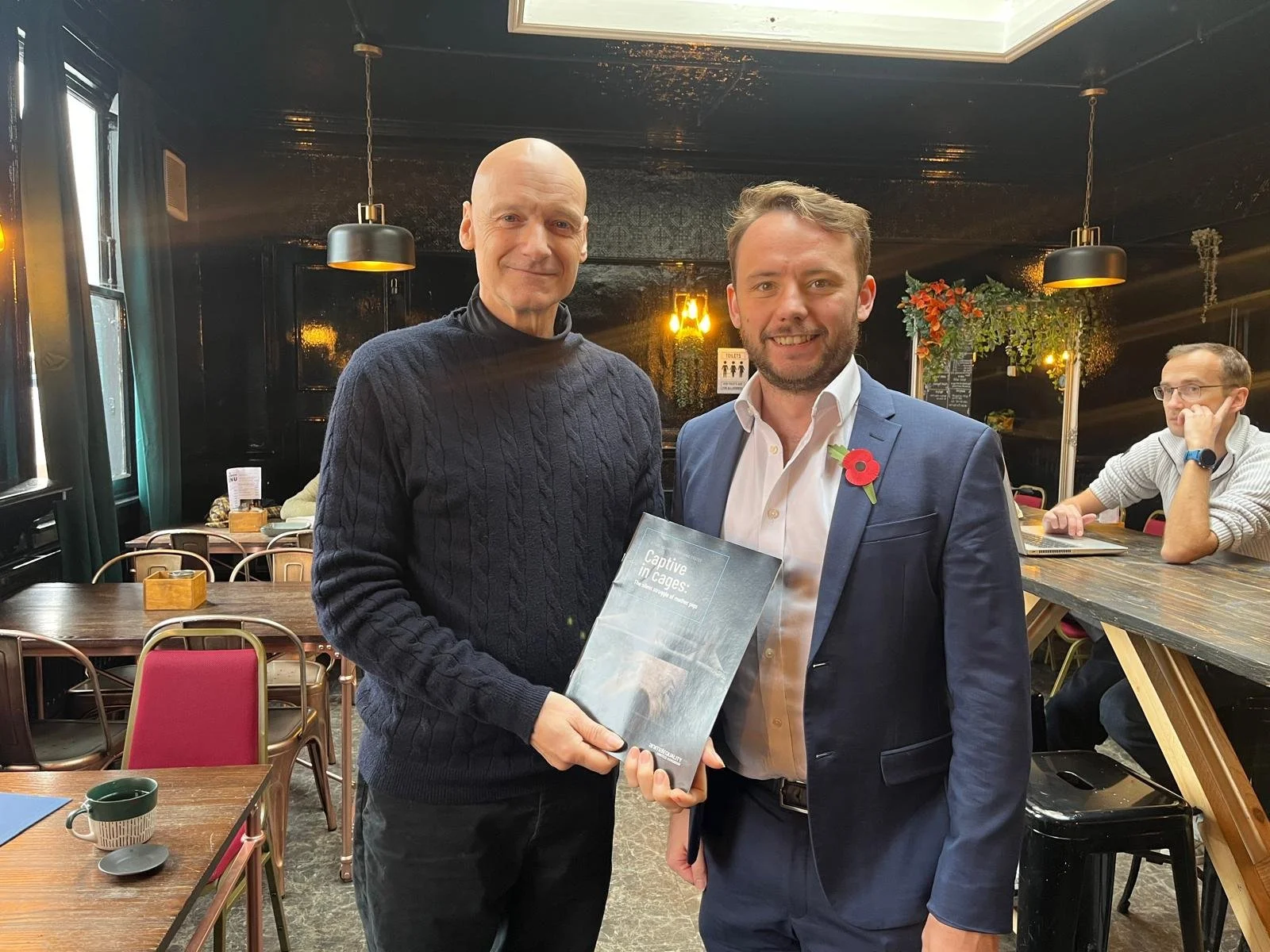
Although many others secured meetings, in the end, my MP didn't come to greet us on the day. But the day afterwards, my fellow constituent got offered a meeting with her staff! As he couldn't make it because of work, I took his place.
After hurriedly giving my detailed explanation of why I cared, of how these cages are some of the most horrible things in the country, but also one of the most tractable to get rid of – I found her staff practically nodding along with me. Turns out it's actually kind of obvious that this is wrong. Why yes, they would absolutely send a letter to the Defra ministers asking for it to be included in the Animal Welfare Strategy – and keep up the good work.
What happened next – and what you should do
The Animal Welfare Strategy was finally published 2 months later, on 22 December. You can read an analysis of it here from Aveek Bhattacharya – you should really read it, but long story short, it includes a plan to ban cages for hens, and farrowing crates for pigs! Here's a summary:
- Phase out cages for hens: ~7M caged at any time
- End the debeaking of layer hens: ~50M/year
- Require humane slaughter for farmed fish: ~45M/year
- Phase out farrowing crates for pigs: ~30K crated at any time
- Ban boiling lobsters and crabs alive: >20M/year
- End the use of CO₂ to stun pigs: ~9M/year
Of course, it looks like it will still take a lot of work and a lot of pressure to actually turn this into reality. But it's a big step. The thanks goes to the efforts of the whole community of animal advocates who have been campaigning for this for many years – and to the British public. It's hard to find polling numbers that are any higher on any other issue – 94% of the British public oppose the use of enriched cages for laying hens. 96% of the British public oppose the use of farrowing crates for pigs.[3]
So why hasn't this happened earlier? I think part of the problem may be that many people, even those who are otherwise very engaged and concerned with the big animal welfare problems, often aren't aware of all the ways they can actually make this known to their MPs and ministers – not just greencarding, but emailing or writing letters to them,[4] attending hustings to ask questions, and making requests for them to make written questions. There's evidence that politicians deem direct citizen contact as one of the most useful sources of public opinion information, while social media cues and polls are considered much less useful.[5]
Basically, you need to make your voice heard. If you want to do something right now, one of the best ways to do that is by responding to consultations – as I write this, there are consultations now open on hens and lambs – please fill yours out! If you need guidance, register for our online event where we we'll be filling it out together.
[1] Shockingly, the organisers had come up with an ice-breaker that was actually quite fun? Truly an innovative team.
[2] Thanks to Paul from Open Cages and Abigail from Animal Equality for these.
[3] Source: Bryant Research, Acceptability of Common Farming Practices, 2022. There's some data from other surveys here.
[4] Compassion in World Farming has a guide on how to write letters in an effective way here: Easy Guide: Effective Letter Writing for Farm Animal Welfare Advocacy
[5] This was the finding of a 2023 study by Walgrave & Soontjens, who surveyed nearly 900 incumbent politicians across five countries and asked which sources of public opinion information they found most useful. See How politicians learn about public opinion, Research & Politics, 10(4) https://doi.org/10.1177/20531680231200692.